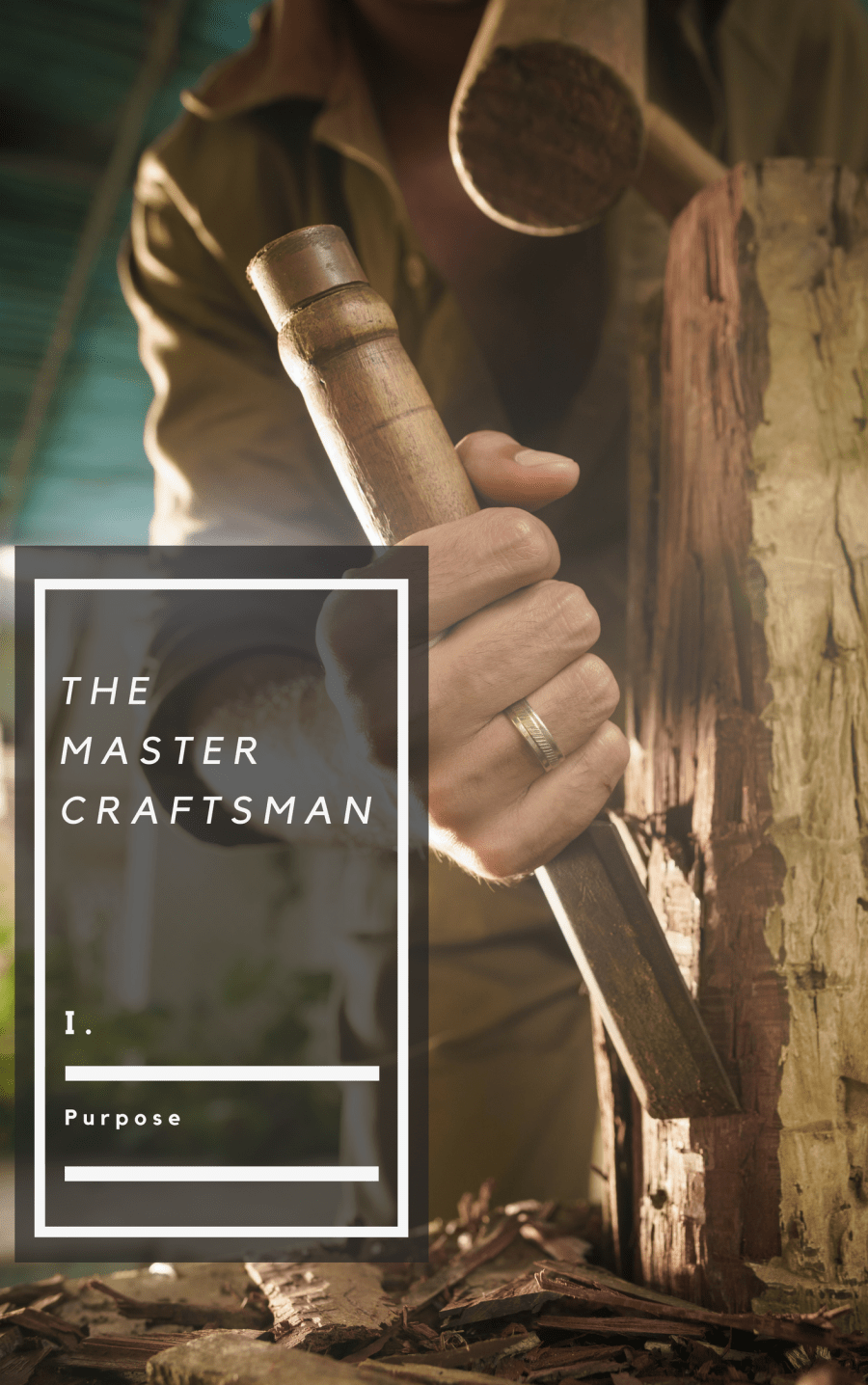
The Master Craftsman
“Please hand me the small chisel,” the craftsman said to his apprentice.
The young lad quickly left his position next to the bench and fetched the smallest chisel in the set and laid it carefully within reach. Noting its worn handle and aged iron, he ventured a question, “Why do you not get new chisels? Yours are very old.”
“What, in particular makes you think I need new chisels?” asked the craftsman as he picked it up gingerly.
“Their handles are splintered and ugly. The metal has chinks in it.”
“Regardless of their appearance, they are sharp. All I need from my chisel is that it be sharp when I must gouge wood.”
“At very least the handles could be replaced, sir. Then they would be more comfortable to hold.”
The craftsman pondered the tool in his weathered palm. “Though they look rough to you, time and use have formed these chisels to fit perfectly in my hand. These are my chisels; they are like no others in existence. Many years have taught them what they are and what they are not. They are not made to be comfortable, they are made for work. Where you see splinters, I see the cherry shavings from cradle made for my son’s first night’s sleep. Where you see ugly iron, I see only the toy my granddaughter held when her hand was the size of an egg. These chisels were given to me by my father. I have sharpened them hundreds of times and their next owner can sharpen them a hundred times more. No, I do not need new chisels. These will do nicely.”
“Yes, sir.”
The apprentice bowed and set off to his duty of cleaning. In a deep corner of the carpentry shop, he noticed a stack of unhewn, dark wood set apart from the other lumber.
“Master?” he called. “What shall I do with this wood?”
Looking up from his work, the craftsman set down his chisel and ambled over to the lad, wiping his calloused hands on his apron as approached.
When he arrived, he looked at the wood and asked, “What would you do with it?”
“I do not know. I suppose it should be stacked with the others.”
“Do you know what species this is?”
“No, sir, I do not,” answered the boy honestly.
The master smiled gently. “Well, do you like it? Do you think it can become something worthy?”
The boy inspected the wood and felt the roughness of it. The boards were thick and marred by many splashes of color variation surrounding what appeared to be a knot hole that ran throughout. Although he had seen his master make beautiful things from the rawest of material, he had to admit that this wood seemed too blemished for proper use.
“I do not,” he replied.
“And why not?” Questioned the master.
Considering his answer carefully, the lad said, “The knot makes the wood worthless. It would not be suitable for a piece of furniture with your name.”
“Ah, I see,” said the master. He ran his hand slowly over the rough wood, wiping away the dust left from years of storage. “This, lad, is walnut. I collected this long ago and have been saving it for something very special. I do not yet know what piece it will be, but when that commission comes, I will recognize it and this walnut will be perfect. Like you, when most people see the indifferent color of it, they see flaws. They see the knot and its wormholes and believe it unredeemable. I choose to see it differently. I believe this wood has a soul – a uniqueness that will make it beautiful beyond what you and I currently see in it. We will find its purpose, and in doing so, we will make it beautiful.”
“But how will the holes be hidden?”
The master craftsman smiled knowingly.
“I do not intend to hide them, to do so would be to take away that which sets it apart. I will draw attention to these flaws so they can sing – telling a story that no other can tell.”
Though his understanding was incomplete, the lad desired to continue his duties.
“Yes, master. What then would you like me to do with it?”
“Let us leave it here and hope its use is made clear very soon,” said the craftsman. “That is enough for today. My back is stiff and the sun is low. I will see you on the morrow when the sun shows its face again. Rest well, my friend.”
“Yes, sir,” said the lad as he retired his broom and hurried into the fresh air.
Click HERE to go on to part 2.
This story has been welling in me for a year as I have been learning from the master craftsman. Four chapters exist today to be published as a weekly serial… the final chapter has yet to be written.



 A Generous Helping