The Last Dance

img_1254-copy.png
I’ve been watching her dance for thirteen years. I’ve seen her grow from a tiny cherub whose only job was to jump in time while spreading her arms into a tall, graceful beauty who performs leaps and turns that hurt my feet just to watch. A few weeks ago, we attended her last dance. She is graduating and will move on.

From the start, she loved every bit of it: the costumes, the pageantry, the art. Somewhere down the line, it got harder. She learned that perfection requires rehearsal, effort, and repetition. Over and over again they worked until pieces were performance ready. Still she loved it.

Two days a week turned into four and sometimes five. She developed muscle, then willpower to curb her diet. She fought through injuries and the pain that comes from stress and over-use. She fought to become the best dancer she could be. She became a dancer.

In times of joy, in times of grief, in times of unabashed celebration, uncertainty or pain, what does a dancer do? A dancer dances.

3878_77921734674_7962232_n

In losing her little sister to cancer, she proved the importance of dance. She danced through her grief. Dance became her outlet, her solace, and her comfort. She choreographed and dedicated dances to her – pushing through with silent, beautiful art.

She danced.

I’ve seen her get parts she wanted and watched her handle the disappointment of losing with grace.


At her last recital, she was featured along with the other two graduating seniors in several numbers. They’ve grown up together… become best friends. I believe one of my favorite things, however, was watching her with the baby dancers she now teaches. How incredible that she is now able to pass on her passion to little girls who might perform their last dance thirteen years hence.

In the end, the three danced together as they said goodbye – beautifully mourning the end, yet rejoicing for the years together, and pointing toward the bright futures ahead. The last dance.
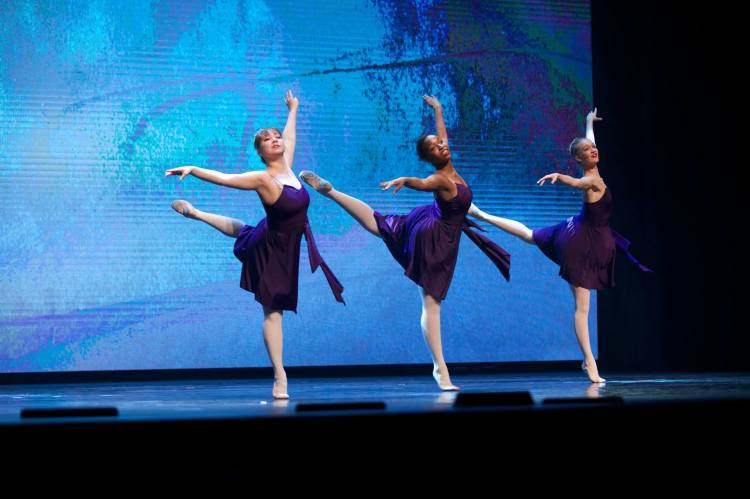
31649358_1752554638135682_8662419973370544128_o

But a week later they were asked to repeat their final dance in a church service where it became an offering to the God who created dance. It was lovely to behold with the dark wooden beams above and the stained glass behind them. I went thinking we were lucky to get a bonus performance – a second last dance. But as I watched through tears, it dawned on me that even this isn’t the last dance… because a dancer always dances. Through it all, a dancer dances.

She will graduate high school with honors and has decided to put college on hold to focus on dance. I don’t know how I would have felt about that a few years ago. Maybe I would have thought school too important to delay. But experience has taught me that to follow a passion is far more important what this world says one should do. She has found what she loves at seventeen years old and I envy her that.

This girl of mine… she is a dancer.

And in the end, a dancer dances.
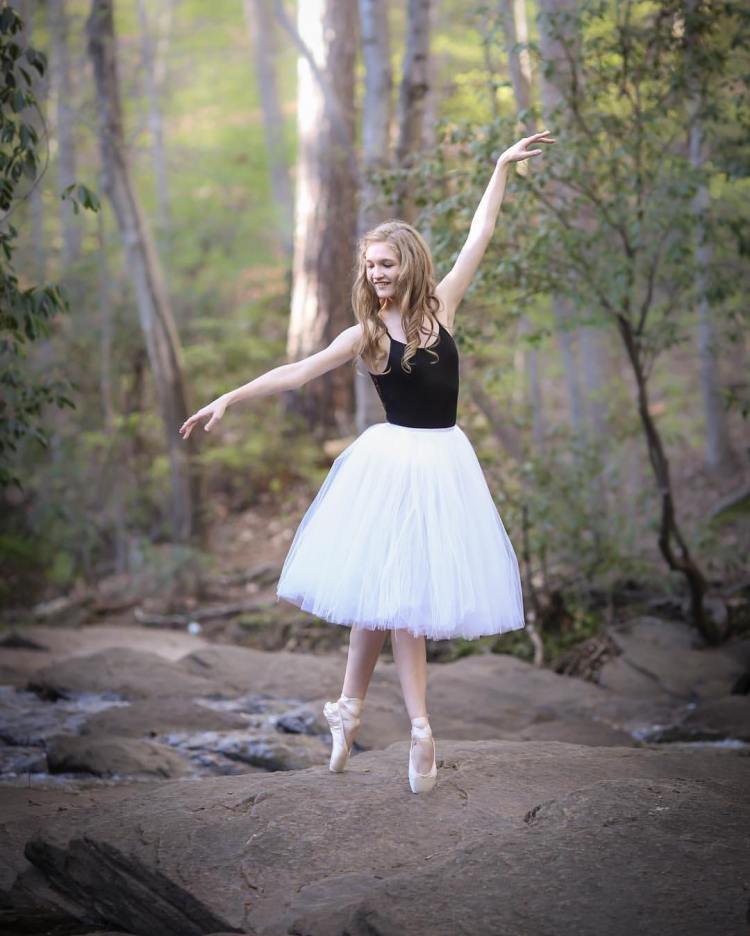
17834230_10212080962843330_4727306899607956532_o


Throwing Marshmallows to Bears

My family is forced to endure many quirks. It’s part of the price of admission to my ride and I seem to latch on to more as the years go by.

One constant is my love of roadside attractions. I absolutely adore them! The cheesier the better. Who doesn’t get the urge to stop when they see the sign for the home of Superman, Metropolis, Illinois or the world’s largest ball of string?

Years ago, I was headed to Gatlinburg with my oldest two girls when I saw a sign in Cherokee, North Carolina that said you could feed bears. Think we stopped?

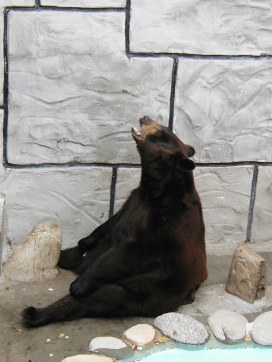
Of course we stopped. We bought our little bags of bear food and soon found ourselves standing on a walkway looking down into pits that housed the massive creatures. They were looking up and waving at us for their food.

OLYMPUS DIGITAL CAMERA

Their food? Marshmallows.

Think of the ridiculous nature of the scene. My curly, blonde little girls, weighing somewhere between 30 and 50 pounds each at the time, awkwardly throwing little puffy balls of sugar at docile-looking 400 to 500 pound bears. At some point, I noticed my girls were actually having a picnic with them – throw one, eat one, throw one, etc. and the bears were getting restless. They never marveled at the size of the bear or the unnatural setting – they were just enjoying their marshmallows with their furry companions as if seated on a checkered blanket together.

Sometimes you witness a scene such as that and it makes you wonder at its absurdity.

But we do the same thing. Let me construct another scene for you.

In February of 2014, our youngest daughter, Kylie was in the 6th grade. We had just gotten back from a Disneyworld vacation when her knee started to hurt. Doctors initially thought it was from all of the walking we did. In March they moved on to a growth plate issue, and then in April we heard the words, “Your child has cancer.”

What I learned on that day was that if I had gotten the same cancer as Kylie had when I was her age, I would have had the same treatment. You heard that right. The treatments for many childhood cancers have changed little in the last forty years.

With all of the scientific, medical, and technological advancements we’ve made in four decades, when it comes to childhood cancer, we are still only throwing marshmallows at bears.

Marshmallows won’t stop the problem bear – they won’t even slow it down if it is really angry. You can hurl all the sweets at it you want but that bear will keep on coming. Like a low budget horror film, the more you stop to throw, the closer the bear gets with its fangs, claws, and mighty roar.

And the childhood cancer bear is getting hungrier. Incidences are up 24% over the last forty years and it is the leading cause of death by disease for children.

So what are we doing as a society?

Sadly, very little.

 Consider this:

  • All childhood cancers combined receive less than 4% of federal cancer research funding – and overall funding dollars took a massive hit in the 2018 budget.
  • Prostate cancer receives 5%.
  • Since 1980, only 4 drugs have been approved specifically for children.
  • 1 in 5 children do not survive.

I picked on prostate cancer and there is a good reason.

  • The average age at diagnosis for childhood cancer is 6 years-old.
  • The average age at diagnosis for prostate cancer is 66 years-old.

The overall cure rate for all childhood cancers combined is 83% and prostate cancer is 95%. Yet our government is spending more research dollars there than on all childhood cancers.

You tell me one 66-year-old grandfather with prostate cancer who would say this is fair! Kylie’s granddaddy, a prostate cancer survivor wouldn’t. In fact, he prayed with the rest of us for God to take him instead.

º

The marshmallows we threw at Kylie’s bear were inadequate, unsafe, and in the end, ineffective. We must find new ways to beat cancer and private funding of cutting-edge research is crucial. If we stand outside the pit and trust the government to do it, that bear will keep coming for our children.

º

Remember those bears that we visited when my girls were young? Soon after we left, two tribal elders fought on the bears’ behalf and the park was closed down. All of the bears were moved to a new life with room to roam. No more marshmallows hurled into enclosures. Real food.

This is what we need for children with cancer. We need to stop throwing marshmallows and work together to find the solution. Our children are depending on us.