 The one and only sled in Portsong belonged to Johnny DeLongo and sat idle for most of the first year he lived in town. His father, Marco, a genius at research, had moved the family down from the Bronx after accepting the position of head engineer at the Swanson Glassworks. Acceptance into Portsong life was not reciprocated for the youngster, who found himself different at every turn.
On his first day of school, he mistakenly assumed everyone was a Yankees fan and hailed Babe Ruth as the greatest baseball player of all time. Little could he know that Ty Cobb was a local hero from a town nearby and the radio station serving the Portsong area in 1926 broadcast only the Detroit Tigers.
His thick New York brogue did nothing to aid his prospects. He had to repeat himself every time he offered an answer to the teacher, prompting snickers from his classmates. He was constantly told to slow down or just stared at with blank faces when he tried to speak.
The place he felt most different was church. Raised a good Catholic, Johnny had no idea what to make of his first service at the Goose Creek Country Church. Instead of a robed, tranquil priest crossing himself and speaking Latin, Johnny sat in the hard pew and watched the antics of the animated Reverend Josiah Crane. The poor child decided the preacher was speaking some strange derivative of English while he slapped the pulpit, waved his arms, wailed loudly, and pounded out his sermon. When the piano began playing, I Surrender All, Johnny was ready to surrender whatever necessary to get out of the old, stuffy church.
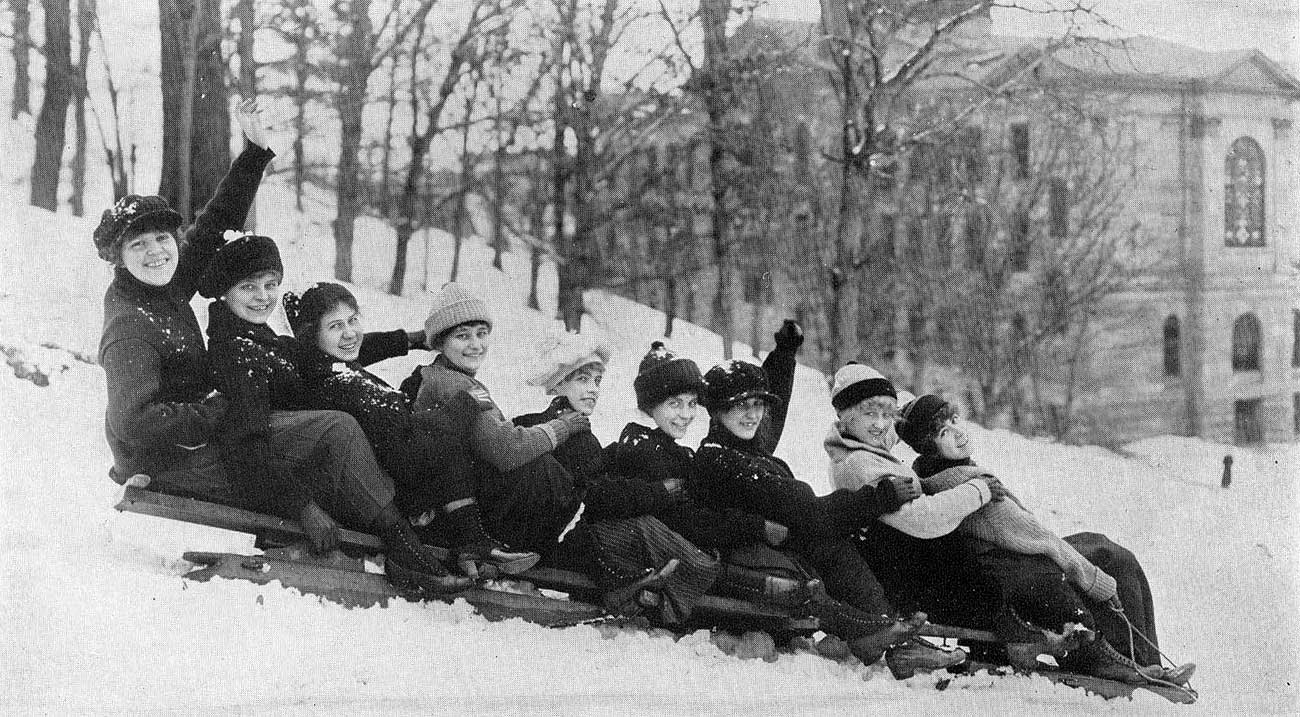
But his misfortune changed on the first day it snowed. The white stuff surprised the other boys, but seemed ordinary enough to Johnny, who retrieved his trusty Flexible Flyer from the cellar and joined the marching boys headed toward Curaban Point. He fell in line next to the only boy who had tried to be nice to him thus far – a boy name Henry Lee.
“What’s that thing?” Henry asked
“Itza sled,” Johnny replied, looking at the scrap of tin the boy held. “Ain’t you got one?”
“No,” lamented Henry. “It’s never snowed before.”
“What?” cried Johnny, wondering what that could possibly mean.
“Not since I’ve been alive,” Henry said matter of factly. “Is that thing fast?”
“Sure is! Gave the ruddahs a fresh coat a wax this morning. It’ll haul!”
Johnny’s tempo had picked up in his excitement and Henry didn’t quite understand him, but he let it go. The two plodded along, talked, laughed, and genuinely enjoyed each other’s company until they reached the summit of the hill and found Virgil Creech waiting with an old shovel to ride.
“Hey-ho, Henry,” he called to his friend before turning his nose up at Henry’s company. “Whatcha doin’ with him?”
“He’s okay, Virgil. Just new here.”
Virgil looked the new boy from head to toe, his eyes finally coming to rest on the red metal and polished wood of the sled. “What’s that thing?” he asked.
Johnny laughed, still surprised at these boys and their ignorance of sleds. “Itza sled. You wanna take it down?” he offered.
Virgil’s eyes grew wide, “Ya mean it?”
“Shoo-wah, climb on,” replied Johnny as he slid the rudders into place on the powder.
Virgil discarded his shovel and was belly-down on the sled in an instant. With a slight push he left behind only a glee-filled scream for the others on top of Curaban Point. Every boy on the hill gathered around as Virgil trudged back up with sled in tow. He merrily answered a dozen questions about the ride and hesitantly offered the sled back to Johnny, who didn’t take it.
“You wanna go?” Johnny asked Henry.
 Henry took him up on the offer, as did every other boy present. In fact, Johnny never got to touch the sled that day, but enjoyed the acceptance as the Portsong boys looked past his newness for the first time and realized he was just a kid, like them. Even Virgil decided he liked this new kid, no matter how funny he talked.
If only grown-ups could come together so easily over a trivial thing such as the only sled in town.



 A Generous Helping