It’s in the Leaves
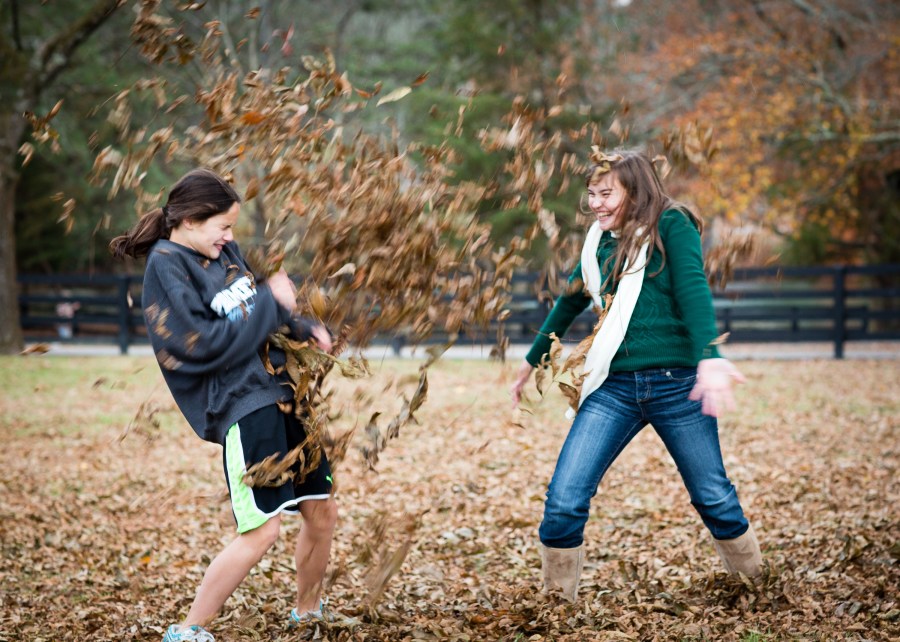
“Can we play in the leaves, Daddy?” she asks whimsically.
“Sure we can, baby. I’ll get the blower.”
Eyes full of wonder, her mind races as she builds on her request. “Can you make a pile big enough that I can jump out of the window onto them?”
I laugh. As a manchild, I give due consideration. As a father, I respond, “No, I don’t think that would be safe.”
Undaunted, she pokes out her lip as last children often do in an overt attempt to tug at my heart. “Please…”
Why didn’t I do it?
Why did I say no?
We live in the woods. Acres of trees. Why would I ever have turned her down?
I didn’t know what was just on the horizon, just past that season. I didn’t know it was her last healthy fall. I was concerned about her safety. I was worried about what her mother would do to me if her baby broke her leg during a dad-sanctioned event.
I said no.
Soon her leg would hurt on its own, and poison much more dangerous than a jump into a pile of autumn leaves would course through her veins. I should have let her jump before cancer pushed aside those carefree joys of childhood. I should have raked up every damn leaf in the city and made a soft blanket to cushion her fall. Instead I said no.
We are heading into our second holiday season without Kylie. We won’t get a turkey drawn with crayons, and we won’t be recognized as something for which she is thankful. She won’t rush to the fireplace to see the note from Santa or tear through wrapping paper to see what he left. The “wonts” pile up like leaves in the fall, but without their vibrant brown, orange, and yellow hues… without the familiar smell of the season that turns our thoughts toward home. Our “wonts” are black and gray.
The holidays are tough and begin with the changing of the trees. For me, there is symbolism in the process. The leaf springs forth, grows to its proper size and shape before withering and falling to the ground. While the tree remains and grows, that individual leaf is gone. The tree may whisper to future leaves about their predecessors. Maybe a tree keeps a record of its life deep within its bark so it can boast of mighty branches and remember leaves that fell to earth prematurely. We will have to do that. Our family tree will grow to include branches that never knew Kylie – never saw her smile, never heard her sing. They will know her only through our stories and memories. That saddens me.
It’s the leaves.
You ask me what challenge comes with the season, and I answer that it is the leaves. They bring this season. They usher in Halloween with its costumes and candy and they warn us of what is coming: Thanksgiving and Christmas. I blame the leaves and I blame myself sometimes for not building a pile of them and saying, “Anything you want, baby.”
Anything you want.
And so, how will I respond?
I intend on building a massive pile of leaves and throwing caution to the wind. I will jump. I will invite others to join me. And I will live fully until it is my time to wither. Then the tree can tell its stories, but I will be gone with her — slaves to the wind and rain no more.
*I wanted to store this here on my blog. It was originally written for The Mighty as a response to the question: “For those who are grieving, what challenges come with the change in season?”


 A Generous Helping